

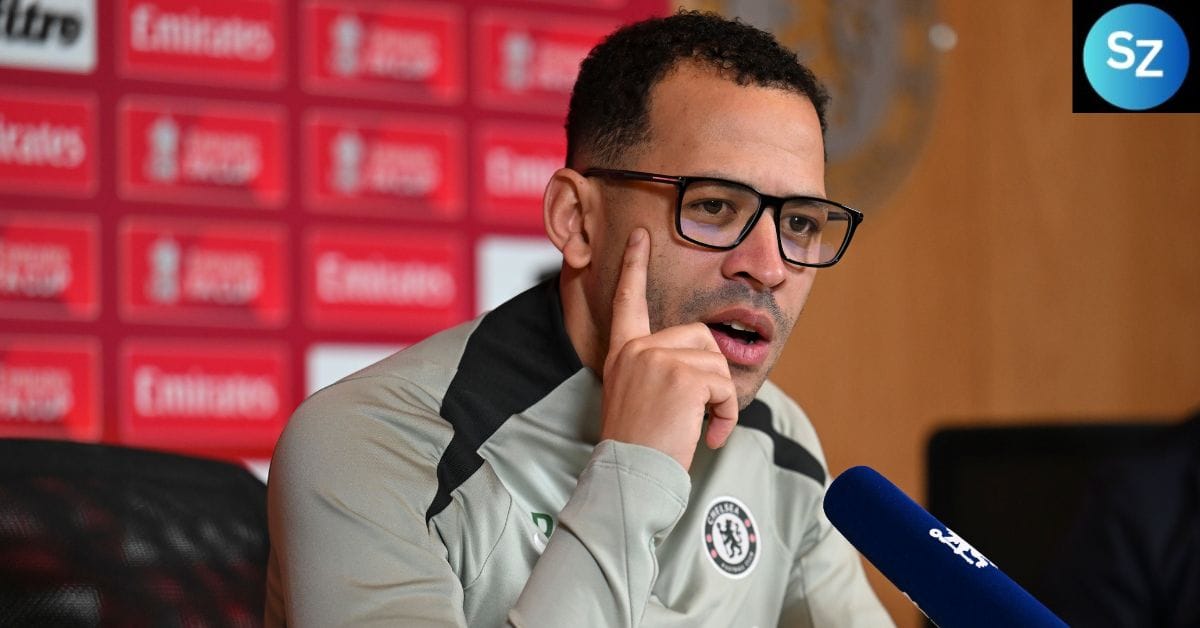
Liam Rosenior has laid down a clear marker at Chelsea, stating he will make all the key football decisions. This declaration comes as he steps into the head coach role, a position that’s seen its share of scrutiny under the club’s multi-stakeholder, data-driven ownership. It’s an assertive opening gambit from the new boss, aiming to define his authority from day one.
Rosenior’s Assertive Stance Defines Role
The new Chelsea head coach isn’t messing about. Liam Rosenior, appointed after Enzo Maresca’s acrimonious departure, made it plain: “I’ll make the decisions.” This is a direct message, meant for players, supporters, and the club’s hierarchy. He wants to be in control of on-pitch matters. And you know, that’s a good thing for a manager.
Chelsea’s structure involves numerous sporting directors and a heavy data influence in recruitment. It’s a collaborative model. But Rosenior, who has a six-and-a-half-year deal, made it clear his authority on team selection, tactics, and day-to-day coaching is non-negotiable. He told reporters he wouldn’t have taken the job otherwise, as reported by The Guardian.
Previous coaches have battled with the club’s hierarchy over control. Maresca’s exit, for example, followed a power struggle that became untenable. Rosenior’s comments aim to reassure everyone he isn’t a passive figurehead. He’s here to shape the team.
Navigating the Modern Chelsea Model
Rosenior accepts Chelsea’s modern structure. He understands the role of sporting directors and data departments. But he draws a line: coaching autonomy is his domain. He expects clear lines of responsibility, with the football department supporting him on pitch-side aspects, not overruling him.
Pundits, like those on ESPN FC, have questioned if a young coach can truly assert himself in such a complex setup. How will his insistence on decision-making fit with an executive-driven club? Time will tell, but Rosenior is confident. He’s worked within this setup at Strasbourg, Chelsea’s partner club, and had success there.
On transfers, he wants a say in player profiles. He needs new signings to fit his tactical ideas. The final calls on who plays, and how Chelsea sets up, will be his. That’s his stance right now.
Beyond Tactics: Culture and Expectations
Rosenior views coaching as more than systems and tactics. “That’s 10% per cent of the job,” he said. “The job is to create spirit, energy, a culture.” This philosophy focuses on human relationships. He believes in honesty, integrity, and care among the squad.
Chelsea supporters have been underwhelmed by recent appointments under the Boehly/Clearlake ownership. They remember big names like Mourinho and Tuchel. Rosenior, who managed at Derby, Hull, and Strasbourg, asks for a fair chance. “Judge what you see on the pitch,” he stated. “Give myself, my staff and my players the chance to prove we are worthy.”
He’s aware of the pressure. Protests against the ownership happened during the Fulham defeat. He faced similar opposition at Strasbourg, but “95% of the fans saw what my team stood for in the end.” He also draws parallels to Sir Alex Ferguson’s Manchester United, backing young players. “The project is about winning,” he said.
Looking Ahead: The Test Begins
Rosenior takes charge of his first game against Charlton in the FA Cup third round. This marks the beginning of his tenure and the first test of his asserted authority. Currently, there are no reports of conflict between him and the club’s senior figures. His comments are presented as a clarification of roles, not a challenge.
His tactical approach blends attacking, high-possession football. Influenced by Guardiola and De Zerbi, his Strasbourg team played few long passes, focusing on building from the back. He aims to bait pressure, exploit space, and create high-quality scoring chances.
The balance between Rosenior’s head-coach authority and executive-led recruitment remains a key talking point. Supporters will watch closely. The club needs results, and Rosenior has taken ownership of that expectation. Now he has to deliver.
 Soureesh Datta
  Ishaan Singh